iPhone Duo: A delightful phone with a rocky launch
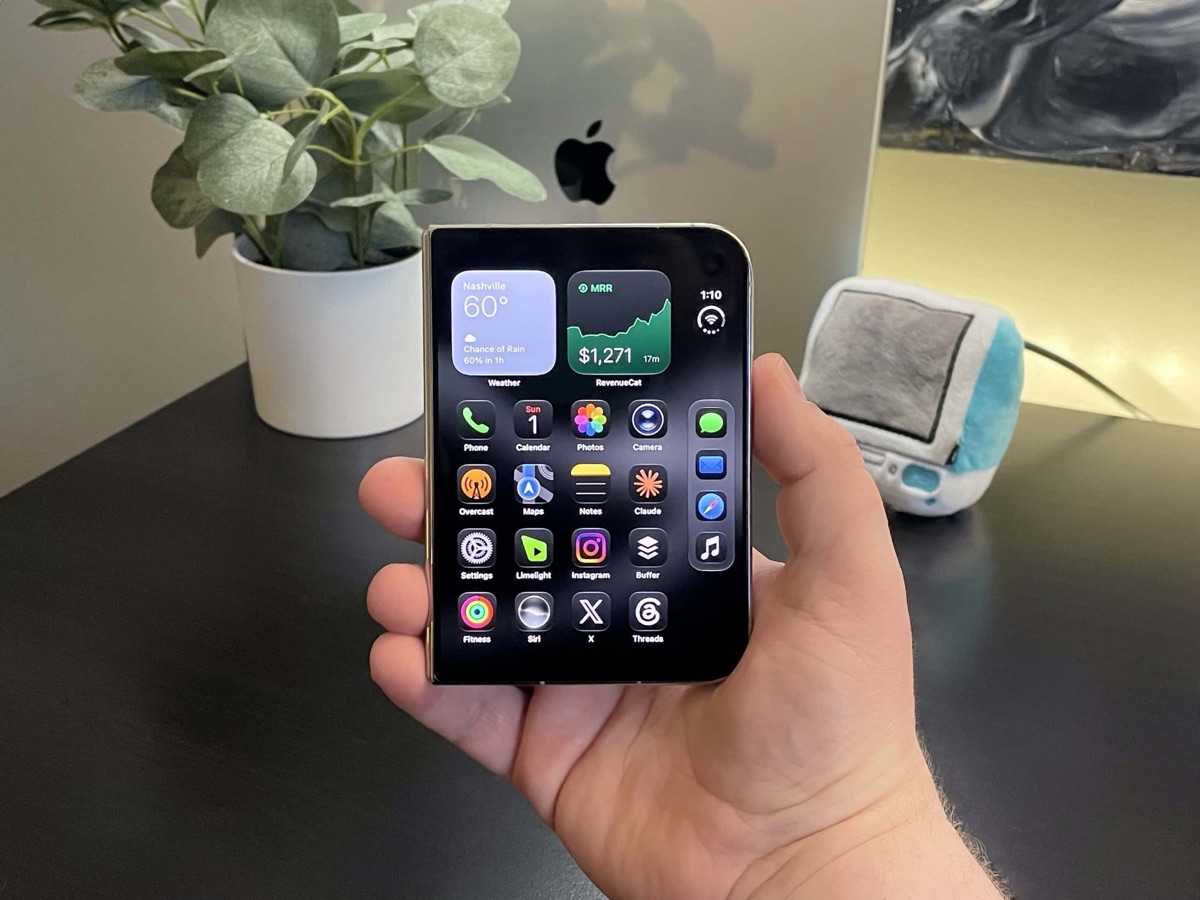
iPhone Duo is the most exciting and enjoyable Apple product I have used in years. You can see and feel how much thought went into it, in a way I haven't felt from Apple in a long time.
Getting my hands on a Duo, however, was another matter. As an indie developer, I experienced this launch from two sides: first as someone racing to prepare an app for a device I had never held or interacted with, and then as a customer trying to buy on day one. Apple stumbled in a few places along the way.
Building for a phone I couldn't hold
I develop a handful of apps for Apple's ecosystem of products. The most important of them right now is Limelight, a discovery and tracking app for movies and TV shows.
A foldable changes the assumptions an app like Limelight is built on. The Duo has an outer display, an inner display, and a hinge, all things my app needs to respond to in various scenarios. I wanted Limelight to feel at home in every configuration.
The prep and development took weeks, and the window in which to do it was narrow. Here's the order of events:
- September 9: Apple announced iPhone Duo.
- September 14: iOS 27 and Xcode 27 shipped without any Duo support.
- September 18: The Xcode 27.1 beta arrived with the iPhone Duo simulator.
- October 15: Xcode 27.1 had its final release.
- October 23: iPhone Duo went on sale.
Mind you, I have a full-time day job. I only have nights and weekends to build apps, so I was already using all the time available to me to make sure Limelight was optimized for the Duo on launch day. On top of that, I had a planned vacation October 3 to 7, during which I knew I wouldn't have time to work on the app at all.
When the simulator did arrive, it covered the basics and little more. It included only two apps: Safari and Settings. An Apple simulator usually comes with a dozen or so apps pre-installed. That may sound like a small detail, but the Duo brought fundamental changes to navigation and layouts. Each of those missing apps would have been an example of best practices for how a Duo app should look and feel. Instead, I watched all kinds of Duo hands-on videos just to get a glimpse of Duo-specific app layouts and controls.
The simulator also couldn't import video. That ruled out testing SceneSnap, one of Limelight's signature features, which identifies a movie or show from a short video clip. I shipped it trusting that it would work as designed.
A simulator can show you a layout. It can't tell you how the app feels in your hand. Most developers were in the same position I was in, designing for hardware we had never touched, with roughly four weeks of beta tools. If you come across apps on the Duo that aren't optimized yet, I'd encourage a little patience. Most of them will get there.
At last, pre-order day
Pre-orders opened Friday, October 16, at 7 AM in my time zone. I was prepared. I was up early, with my configuration chosen through Apple's "Get Ready" feature, which let you pick a configuration and confirm your payment information ahead of time. I had the Apple Store app open on my iPhone and the website open on my Mac.
I hit the wait screen on both devices. One minute passed, then two, then three. Pre-order mornings come with a familiar dilemma: refreshing might cost you your place in line, while waiting might leave you on a page that never loads. I hedged my bets, refreshing on the Mac and leaving the iPhone untouched.
I finally got through at 7:10, having apparently lost the CDN lottery. I placed my order immediately and was met with an estimated ship date of December 1 to December 8.
I was crushed. Though I didn't know it at the time, I had gotten off easy: within about 30 minutes, every configuration in the US had slipped to January 25.
I did have a bit of luck. A few days later, my estimate improved to the week before Thanksgiving. That was welcome news, but it was still about a month after launch.
Launch day, from the sidelines
In the days before launch, Apple Store employees were reportedly told to discourage customers without a pre-order from coming in. The guidance was clear: order online and wait your turn.
On launch day, people walked out of Apple Stores with a Duo in hand while I followed the first impressions from home. A week later, Mark Gurman reported that Apple had sent roughly 80% of its initial inventory to retail stores, and that most day-one buyers got theirs by waiting in line. The customers who followed Apple's advice and ordered online at the first opportunity ended up waiting the longest.
Still, I understand the constraints Apple was working under. Supply was tight, and the company had reportedly worried that manufacturing problems could push the launch into late November. Producing an entirely new kind of iPhone at this scale is hard. Apple has described demand as "nothing short of extraordinary," and after holding one, I understood why.
Finally holding one
The day after launch, I visited my local Best Buy to see the Duo in person. By that point, I knew it inside and out. I had logged hours in the simulator and watched more hands-on impression videos than I'd care to admit, so I didn't expect to be surprised.
I was. Holding the Duo is a very different experience from watching a tech reviewer show you its features. The care that went into it is clear the moment you open it, and I spent several minutes turning it over and admiring it from different angles.
I tried to download Limelight to see my work running on real hardware, but the demo unit blocked App Store downloads. I spent the rest of my visit exploring the software instead. There were little software bugs here and there, but the experience was delightful. I couldn't help but smile the whole time.
The hunt
After that visit, wanting a Duo turned into needing one. I had shipped an app for this phone, and it felt like I should own one.
I set up alerts with Daryl's iPhone Stock Checker and spent Saturday, Sunday, and Monday coming up empty. I live just south of Nashville, in Middle Tennessee, and there are only three Apple Stores within a reasonable drive. Most of my alerts were for stores three or more hours away, and whatever stock appeared was gone within a minute.
On Tuesday morning, an alert finally came through for a store nearby. I held my breath, placed the order, and watched it go through. A couple of hours later, the Duo was mine, and I canceled my pre-order.
The real test was Limelight. Luckily, it worked exactly as I had hoped, SceneSnap included. Weeks of building for a phone I couldn't hold had paid off.
First impressions
I've had the Duo for only a few days, so these are early impressions. The short version is that it's fun and lives up to the hype.
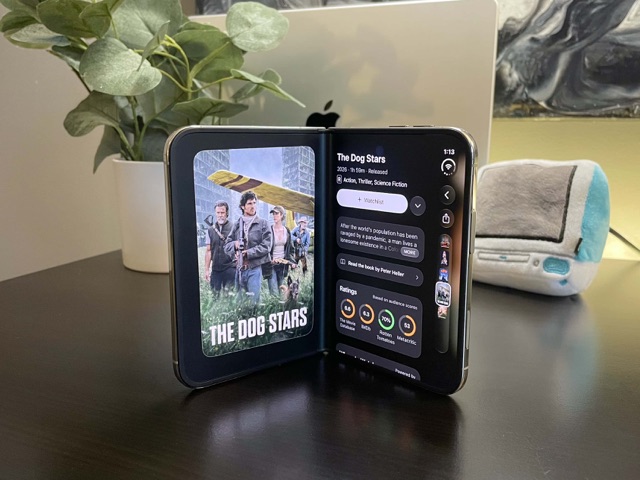
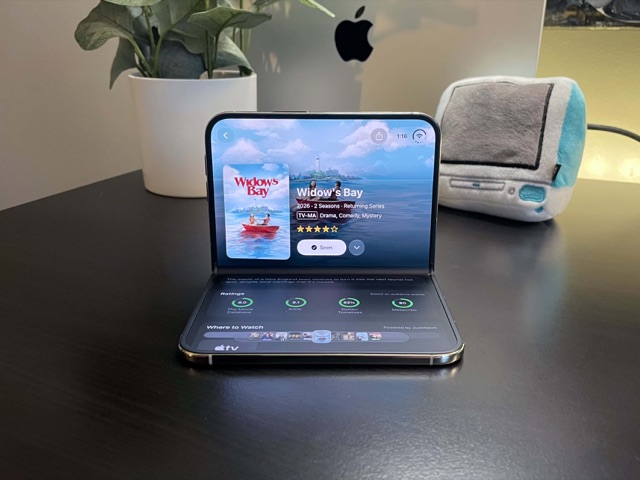
The Duo feels unlike any other Apple product. The materials, the camera plateau, the finish, and the other familiar components are all recognizably iPhone, yet the experience of using it is entirely its own, in the best way. It reminds me of an era when Apple introduced bold new designs every few years, before the company settled into refining designs that stay around for a long time. The Duo brings that sense of newness back. The word I keep returning to is delightful. It's a joy to use, and folding it never stops being satisfying.
In everyday use, I find myself on the inner display more than the outer one, roughly 60/40. I tend to pick up my iPhone with intent, either to get something done or to settle in for a while, and for that the larger screen is the natural choice.
One of the uses I was most excited about was reading, and I can now say that the Duo has replaced my Kindle Paperwhite. The Paperwhite is light and well sized, but I have never liked the low contrast of its e-ink display. Reading on the Duo is fantastic, and the small difference in weight hardly matters.
Much has been made of apps that aren't yet optimized for the Duo. In my experience, the list is short: my banking app and a few apps that rarely see updates. Nearly everything I use regularly already supports the Duo, and the rest will soon follow.
Reviews also predicted I would miss Face ID. I doubted it at the time, and I still think Touch ID is the better option in some situations, such as when the phone is lying flat on a table or when I am cozy and curled up in bed. I'll concede the point, though. I do miss Face ID a bit, and I'm still training myself to rest a finger on the button to unlock. Apple Watch has made the transition much easier. Apple has made unlocking with Apple Watch far faster and more reliable than it once was, and most of the time my watch unlocks the phone before I think to reach for the Touch ID button.
The Duo does have a few rough edges. It's a little heavy and thick when folded. It isn't excessive, but combined with the wide outer display (wide for an iPhone, at least), it takes some adjustment. It also runs warm fairly often. That may simply be the first few days with a new device, when everything is syncing, Siri is optimizing, and far more is happening in the background than usual. I'll give it a few weeks before drawing conclusions.
My biggest frustration is the camera bump. Writing and drawing on the Duo with Apple Pencil is a lot of fun, but on a table, the bump makes the phone wobble so much that it becomes unusable. A flat table is exactly where I want to write and draw, so it's a real problem. I'm not sure what I'll do to solve it. I don't use a case with my Apple devices. Perhaps I can 3D print something that will stop the wobble.
A few smaller notes:
- My husband takes most of our photos, so not having Apple's most advanced cameras isn't a deal breaker for me.
- It's too early to judge battery life. I'm rarely far from a wireless charger, so I don't expect it to be an issue.
- I keep accidentally pressing the Touch ID button or Camera Control when I pick the phone up. I'm still getting used to where they sit.
- The FaceTime camera on the inner display stands out more than I expected. The area has fewer pixels than the rest of the screen, and the matte finish doesn't extend over the cutout. As with most quirks of a new form factor, I expect I'll stop noticing it.
The Duo is the kind of product that made me fall in love with Apple in the first place, which is exactly why the rocky launch bothered me as much as it did. If I could ask Apple for two things next time, they would be developer tools on announcement day and clearer communication about where the stock is going.
The Duo is now my main phone, and I expect to keep enjoying it. Apple had a rough launch, but the phone was worth the wait, and it will keep me smiling for some time.